Simple Division Trick!

Simple Division Trick

The video below shares a trick to help you solve any kind of division problem.

Or you can keep reading below for more details on simplifying division.

Division Made Simple

The example given in the video below is 128 divided by 4.

The key to simplifying any addition, subtraction, multiplication, and division problem is to break it down into terms that are easier to work out.

For example, 128 is the same thing as 120 plus 8.

Now, we can divide 128 by 4 using that information above.

Let’s divide 120 by 4 and 8 by 4.

120 divided by 4 equals 30.

And 8 divided by 4 is 2.

All that is left to do is to add 30 and 2 together.

This makes the answer to 128 divided by 4 equal to 32.

Conclusion

As mentioned earlier, the key is to solving problems down into smaller, easy-to-work components.

The smaller components make any operation simple to navigate.

I hope this information is helpful as you solve math problems.

Thank you for reading this blog.

This is the Learning Numbers with John blog, content dedicated to sharing basic math skills for adults.

For even more tutorials, click HERE!

God bless.

Probability and a Dice Roll!

Probability: What are the Chances

Check out the video below to find out about probability.

Also, you can keep reading for more information below.

We deal with probability more often than we think.

Let’s take your car, for instance.

There is a chance that your car will either crank or not.

If your vehicle is having trouble, the probability of your car starting is less.

A newer car has a better chance of cranking up.

That is just a basic example.

Let’s define what probability actually is.

Probability is the chance of something occurring, compared to the chance of the event happening.

We see probability mostly in:

  • Sports
  • Gambling
  • Economic prediction

Let’s see probability in action.

Below, I will share how probability works when it comes to a dice roll.

Probability and a Dice Roll

A 6-sided dice makes it easy for us to see how probability works.

Photo by Jonathan Petersson on Pexels.com

When it comes to a dice roll of the dice above, there is a 1 out of 6 chance you will roll a number.

Chances are you will roll a number from 1 to 6.

1, 3, and 5 are odd numbers.

2, 4, and 6 are even numbers.

There is 100% chance you roll a number.

The possibility of you rolling an odd number is 3 out of 6, or 50%.

The chances of you rolling an even number are 3 out of 6, which is also 50%.

This basic example gives you a glimpse into how probability works.

Click HERE to check out the 3 Basic Math Skills that each adult should know.

Conclusion

Hopefully, this blog post helps you to understand probability better.

Knowing the probability, or chances of something happening, will help us to make better decisions.

Thank you for reading and hope this helps.

Have a great day and God bless.

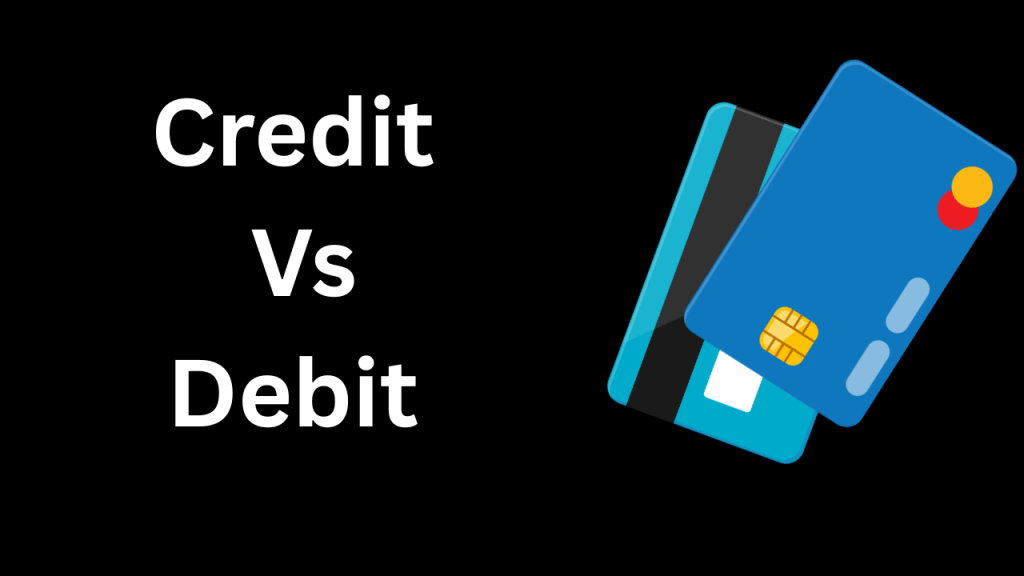
Debit vs Credit Card! Which Is Better?

Click the image below to see the video that talks about using a credit vs debit card.

Using Your Card

Using a card is the ultimate convenience today.

We live in a time dominated by online shopping.

It’s so easy to swipe without thinking.

But the truth is that we should think.

There are differences in using a credit vs debit card that you need to consider.

Allow me to share them below.

Credit vs Debit Card? Which To Use?

Here are some things you need to know about using a debit versus credit card.

DEBIT CARD

Here is what you should know about using a debit card:

  • Purchases from debit cards are taken out immediately or almost immediately.
  • Debit cards can be used to get cash from ATM machines.

CREDIT CARD

Here are some things to consider about credit cards:

  • A credit card is issued by a particular company.
  • The purchases you make with a credit card are paid for by the company that issued the card.
  • Using a credit card can equal to debt.
  • A credit card works similarly to a personal loan.

Credit card debt is a big issue in our society.

These credit cards have pros and cons to think about.

PROS OF CREDIT CARDS

You can use credit cards anyone.

Most merchants accept credit cards of all kinds.

Also, using credit cards responsibly can build up your credit score.

Being a responsible credit card user can help you get lower rate loans and save money in the long run.

CONS OF CREDIT CARDS

In the same manner that using a credit card can help your credit score, it can also hurt your credit.

Being irresponsible with a credit card can lead to damaging results.

These include:

  • Being at risk to higher loan rates
  • Paying more money and interest for your credit card
  • Lowering your credit score

Of course, you should be careful to use credit cards at your own discretion.

Conclusion

Whether you should use credit or debit cards is your personal choice.

However, I think that cash is still a great way to help you be more financially responsible.

Using cash can give us better control over our finances, in my opinion.

Thank you for reading and hope that helps.

God bless.

DISCLAIMER: I am NOT a financial advisor or professional. The information presented is for educational purposes only.

3 Insurance Terms You Need to Know!

Insurance, Uggghhhh!!!!!!!

There are a few things that NO ONE likes dealing with.

Here are just a few…

SHOPPING LONG LINES AROUND HOLIDAY SEASONS….

GOING TO THE DMV…

WORKING LONG HOURS ON A FRIDAY AFTERNOON….

Another one, in my opinion, is dealing with insurance.

Photo by Kindel Media on Pexels.com

Sometimes, dealing with insurance companies can be a tedious process.

However, I hope to help you by sharing 3 basic terms everyone needs to know about insurance.

Click HERE to see my video about the insurance terms.

3 Basic Insurance Terms You Need to Know

The 3 basic insurance terms will be listed below.

PREMIUM

A premium is the amount of money charged for the insurance policy.

For instance, if I sign up for “X” insurance company, my 6-month premium cost will be $1000.

Monthly payments are designed to satisfy the premium until the coverage period ends

DEDUCTIBLE

A deductible is the total amount paid to out of your pocket each year before your insurance company pays the rest.

Before going to a doctor’s office or to a mechanic, you may be asked to pay a deductible.

Be careful because a low deductible could mean you’re paying more on the back end.

COPAY

Copay is the amount you pay when services are rendered.

Some policies may require you to pay an amount for service being rendered.

For instance, at a recent doctor’s appointment, I paid $25 for my copay afterwards.

Conclusion

Insurance can be a bit daunting to maneuver through.

However, I hope this blog post can help you understand insurance better.

Thank you for reading and God bless.

DISCLAIMER

I am not a financial advisor or professional.

This content is for educational purposes only.

Basic Math Functions You Need to Know!

Basic Math Functions

If you struggle with the basics of anything in life, you are in trouble.

This is especially true when it comes to math.

Being successful in life will require us to have a basic understanding of math concepts.

Photo by Karola G on Pexels.com

The four basic concepts of math are:

  • addition
  • subtraction
  • multiplication
  • division

This blog post will cover these 4 math operations in simplistic terms.

We will start by covering addition.

Addition

Normally, addition between two numbers or more numbers make the total bigger.

Click HERE to see the video about addition.

When you add to something, you make it bigger.

The result of addition is called the sum.

Subtraction

Subtraction is the opposite of addition.

When you subtract a number, you make it smaller.

Click HERE to see the video about subtraction.

Multiplication

Multiplication is similar to addition.

Multiplication is the process of adding a number to itself many times.

Click HERE to see my video on multiplication.

The answer of multiplication is called the product.

Division

Division is similar to subtraction.

Division is the process of subtracting a number to another many times.

Click HERE to check out the video about division.

Conclusion

The basics of math are very important.

Having a solid foundation of the math basics will help become better at problem solving and critical thinking.

These are two keys to success in any area of life.

I hope that this blog post helps you better understand the basic operations of mathematics.

Welcome to Learning Numbers with John

Welcome to Learning Numbers with John

Welcome to Learning Numbers with John.

This blog is all about helping adults with math basics.

I will share tips, tutorials, tricks about how math affects our daily lives.

It is my hope that this will be a resource to help you be better in math.